
Do You Need an Elevation Certificate? Here Is What to Know
If someone has told you that you need an elevation certificate, you are probably wondering what that means, how long it takes, and what it will cost. This article covers who needs one, when it is required, how to get one, and what happens once the process is done.
Who Needs an Elevation Certificate?
Not every homeowner needs one. It comes up when flood risk is part of the picture.
You will likely need an elevation certificate if:
- Your lender is requiring flood insurance as part of your mortgage
- Your property is in or near a FEMA-designated flood zone
- You got a letter from your lender or insurance company saying your home may be in a flood zone
- You want to apply to have your property removed from a flood zone designation
- You are building in a floodplain and your local government requires one for a permit
In the Atlanta area, properties near the Chattahoochee River, Peachtree Creek, and South River are among the most commonly affected. If you live near any creek or low-lying area, there is a good chance flood zone status has come up at some point.
When Is It Required?
Federal law requires flood insurance if your home has a government-backed mortgage and sits in a high-risk flood zone. When that happens, your lender will ask for an elevation certificate to figure out the right flood insurance premium.
According to FEMA, more than 5 million properties across the United States are enrolled in the National Flood Insurance Program. Georgia has a large number of flood-prone parcels, and Atlanta’s network of creeks and rivers makes this a common issue across the metro area.
Some local governments in Georgia also require an elevation certificate when you apply for a building permit on a property in a floodplain.
Who Can Complete One?
Only a licensed land surveyor, engineer, or architect who is legally allowed to certify elevation information can complete this form. In almost all cases, it is a licensed land surveyor who does the work.
In Georgia, that surveyor must hold an active license from the Georgia State Board of Registration for Professional Engineers and Land Surveyors. You cannot fill out this form yourself. A certificate signed by anyone who is not a licensed professional will not be accepted by your lender or insurance company.
How to Get One in Atlanta
The process is simple, but it does require a licensed surveyor to visit your property.
Step 1. Call a Licensed Land Surveyor
Contact a licensed land surveyor and let them know you need an elevation certificate. Have your property address and a copy of your deed ready. If you have an old survey from a previous owner, share that too since it can save time.
Step 2. The Site Visit
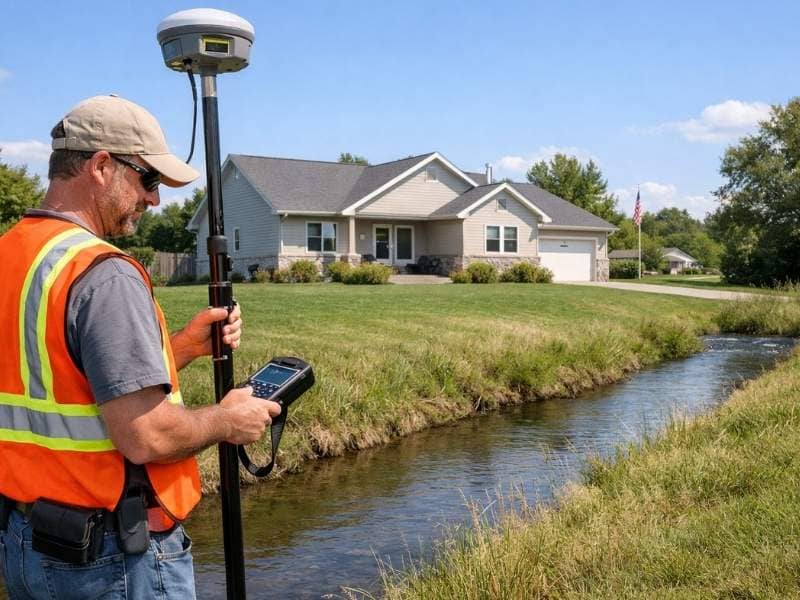
The surveyor comes to your property and takes a few key measurements. They record the height of your lowest floor, the height of the ground right next to your home, and the height of any attached equipment like HVAC units. They also note what type of building you have and check where your property sits on the FEMA flood map.
Step 3. You Receive the Certificate
After the visit, the surveyor fills out the official FEMA elevation certificate form, signs and stamps it, and sends it to you. You then pass it along to your lender or insurance agent.
In Atlanta, most elevation certificates are completed within one to two weeks from the time you hire the surveyor.
How Much Does It Cost?
Most elevation certificates for a standard home in the Atlanta area cost between $300 and $700. The price depends on how complex the property is, how easy it is to reach, and how quickly you need it done.
If your property has multiple buildings or sits in an area with unclear flood map boundaries, the cost may be higher. Always ask for a written quote before work starts.
What Happens After You Get One?
Once you have your elevation certificate, a few different things can happen depending on what it shows.
Your flood insurance rate may go down. If the certificate shows your lowest floor is above the flood level, your insurance agent can use that information to calculate a more accurate and often lower premium.
You may be able to get out of the flood zone. If the measurements show your property is actually above the flood hazard area, you or your surveyor can submit a request to FEMA called a Letter of Map Amendment. If FEMA approves it, the flood insurance requirement tied to your mortgage can be removed. This process is done online and usually takes around 60 days.
You may still need flood insurance. If the certificate confirms your home is in the flood zone and below the flood level, insurance will still be required. The certificate helps your agent calculate the right rate instead of using a default rate, which is often higher.
Frequently Asked Questions
How long is an elevation certificate valid?
There is no set expiration date. But if FEMA has updated the flood maps in your area since your certificate was completed, your lender or insurance company may ask for a new one based on the updated maps.
Can I use an old certificate from the previous owner?
Sometimes. If the flood maps have not changed and nothing has been added or changed on the property, an older certificate may still work. Your lender or insurance agent will let you know if a new one is needed.
Does getting an elevation certificate mean I no longer need flood insurance?
Not automatically. The certificate gives your lender and insurance company the data they need to make that decision. If your elevation is above the flood level and FEMA approves a map amendment, the requirement can be lifted. Until that process is finished, the requirement stays.
What is the difference between an elevation certificate and a flood survey?
They refer to the same process. A flood survey is the fieldwork the surveyor does to take the measurements. The elevation certificate is the official form that gets filled out using those measurements. You need both, and they happen together as one job.
