
How to Resolve a Property Line Dispute Without Going to Court
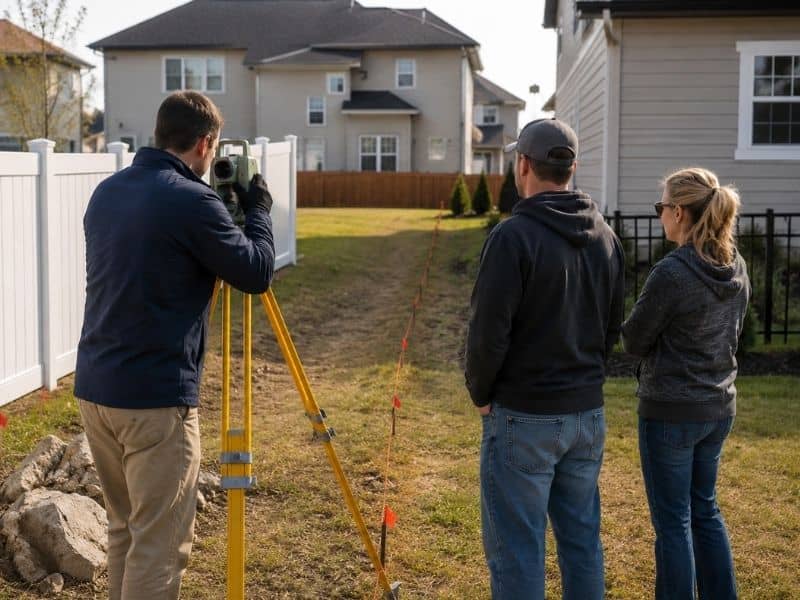
A fence goes up in the wrong spot. A neighbor builds a driveway that crosses onto your land. A shed has been sitting over your property line for years. These situations are more common than most people think, especially in a growing city like Atlanta, Georgia. The good news is that most of them can be resolved without ever stepping into a courtroom. If you are dealing with a property boundary survey dispute, here is where to start.
Why Property Line Disputes Happen
Property line disputes happen when two neighbors disagree about where one property ends and another begins. Common causes include old deed descriptions, missing property markers, new construction that crosses a boundary, and conflicting survey records.
Most property line disputes are not caused by bad intentions. They usually come down to one of these situations:
- Old deeds that use vague or outdated land descriptions
- Property line markers that have been moved, removed, or buried
- Fences, driveways, or structures built without checking the actual boundary
- Conflicting surveys that show slightly different boundary locations
In Atlanta, rapid development and infill construction have made these disputes more common. When new homes go up next to older ones, boundaries that were never questioned can quickly become a conflict.
What Happens If You Ignore a Property Line Dispute
Ignoring a boundary dispute can lead to serious legal and financial problems. In Georgia, if a neighbor openly uses part of your land for 20 years without objection, they may gain legal rights to it through adverse possession. Acting early is always the better choice.
Letting a dispute sit unresolved is rarely a good idea. Here is what can go wrong:
- Adverse possession claims. Under Georgia law, a person who openly uses someone else’s land for 20 years or more may claim legal ownership of it. Acting early protects your rights.
- Title problems. Unresolved boundary conflicts can surface during a title search and delay or block a future sale.
- Legal costs. The longer a dispute drags on, the more expensive it becomes to fix.
- Damaged relationships. Boundary conflicts between neighbors tend to get worse, not better.
The First Step: Get a Boundary Survey
The most reliable way to resolve a property line dispute is to hire a licensed land surveyor for a boundary survey. It locates the true property lines based on legal deed records, giving both parties a clear and legally defensible answer.
Before you talk to a lawyer or confront your neighbor, get the facts. A boundary survey is the most accurate and legally recognized way to find out exactly where your property lines are.
A licensed surveyor will review your deed and plat, search county records, visit the property to locate existing markers, measure the boundaries, and prepare a certified map showing the true property lines. New corner markers can be placed if the originals are missing.
The survey gives you something solid to work from. Without it, any conversation is just one opinion against another.
How to Talk to Your Neighbor About a Boundary Dispute
Approach the conversation calmly and with facts in hand. Share the results of your boundary survey and give your neighbor a chance to review them. Many disputes are resolved at this stage without any legal action. If the neighbor disputes the survey results, they can hire their own licensed surveyor to verify the findings.
Most boundary disputes do not end up in court. Many are resolved through a calm conversation once both sides have accurate information. Here are a few tips:
- Wait until you have your survey results. Do not approach your neighbor based on guesses.
- Stay calm and focus on the facts. Keep the conversation professional, not personal.
- Share the survey. Give your neighbor a copy of the certified map and explain what it shows.
- Give them time to respond. They may want their own survey done, which is a reasonable request.
- Document everything. Keep a written record of all conversations, dates, and agreements.
When to Involve a Lawyer
You should consult a real estate attorney if your neighbor refuses to accept the survey results, if a structure has been built over your property line, or if you believe adverse possession may be an issue. An attorney can help you understand your legal options and, if needed, file a boundary line action in Georgia court.
In some cases, a conversation and a survey are not enough. Consider hiring a real estate attorney if:
- Your neighbor refuses to move a fence, structure, or driveway that crosses the boundary
- You believe adverse possession may already be in play
- The encroachment affects your ability to sell or develop the property
- The dispute involves a significant amount of land or financial value
Georgia courts handle boundary line disputes through a process called a boundary line action. A judge can legally establish where the property line sits, which becomes permanently binding on both parties.
Why Homeowners Face This More Often
Atlanta’s growth over the past two decades has put pressure on property boundaries across the metro area. Older neighborhoods are seeing new construction, lot splits, and fence replacements at a high rate, and many original property markers have been buried, paved over, or lost.
In neighborhoods like East Atlanta, Decatur, and Smyrna, many properties have not had a professional survey in 30 or 40 years. When a neighbor starts a renovation or a new buyer closes next door, old boundary questions come back fast.
Frequently Asked Questions
How much does a boundary survey cost?
A residential boundary survey typically costs between $500 and $2,000, depending on lot size and boundary complexity. Properties with unclear deed descriptions or missing markers will cost more. Always get a written quote before proceeding.
Can a neighbor dispute the results of my survey?
Yes. If your neighbor disagrees, they can hire their own licensed land surveyor. If the two surveys conflict, a real estate attorney can help determine which is more legally sound or pursue a boundary line action in court.
Do I need a survey to put up a fence?
You are not legally required to get a survey before building a fence, but it is strongly recommended. Building in the wrong location can create a dispute and may require you to move the fence at your own cost.
