
Why Your Lender Is Asking for an ALTA Survey And What It Means
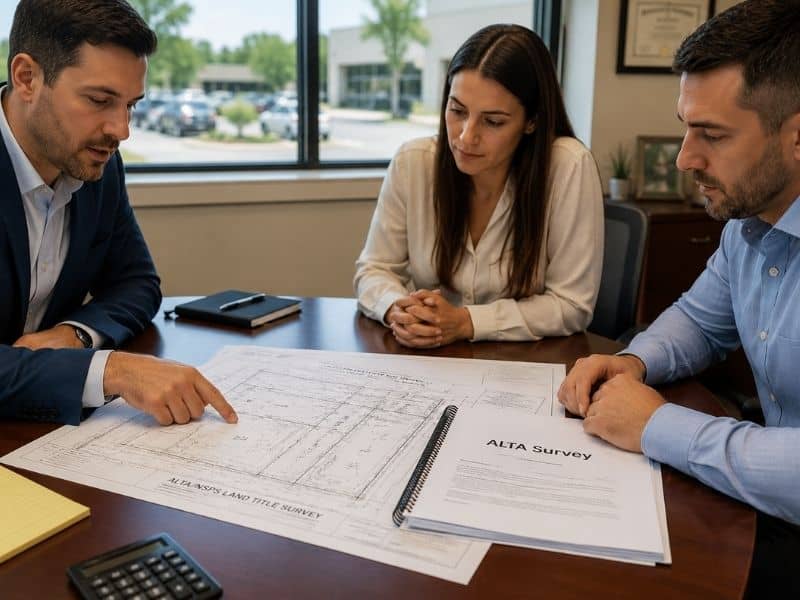
If your lender or title company just asked for an ALTA survey, you are probably wondering what that is and why it matters. Most buyers have never come across one before.
What Is an ALTA Survey?
An ALTA survey is a detailed type of property survey. It follows rules set by two national groups: the American Land Title Association (ALTA) and the National Society of Professional Surveyors (NSPS). It maps property lines, buildings, easements, and flood zones. Most lenders and title companies require it when you buy commercial property.
An ALTA survey is the most detailed land survey you can get in the United States. It follows a set of national rules last updated in 2021. Every licensed surveyor in the country uses the same standard, so lenders and title companies trust it no matter which state the property is in.
What Does an ALTA Survey Include?
An ALTA survey shows property lines, buildings, fences, driveways, easements, flood zone info, and zoning rules. Buyers and lenders can also add optional items, called “Table A” items, such as parking counts or underground utility research.
Every ALTA survey must include:
- Property lines and corner markers
- Buildings, driveways, fences, and other structures on the land
- Easements, which are rights that allow others to use part of the property
- Any place where a neighbor’s structure crosses onto the property
- Ways to enter and exit the property from a public road
- The property’s flood zone status based on FEMA maps
- Local zoning rules and required setback distances
Buyers and lenders can also request extra items through the ALTA/NSPS Table A, such as parking counts, wetland markers, and utility research. Your surveyor will help you choose the right ones.
ALTA Survey vs. Boundary Survey
A boundary survey only shows property lines. An ALTA survey shows property lines plus buildings, easements, flood zones, and zoning details. ALTA surveys follow a national standard. Boundary surveys vary by state.
| Feature | Boundary Survey | ALTA Survey |
| Property lines | Yes | Yes |
| Buildings mapped | No | Yes |
| Easements shown | Partial | Full |
| Follows national standard | No | Yes |
| Accepted by title companies | Limited | Yes, in all 50 states |
| Typical use | Residential | Commercial |
For most home purchases, a boundary survey is all you need. If you are buying commercial property, your lender will almost always require a full ALTA survey.
Who Needs an ALTA Survey?
You need an ALTA survey if you are buying commercial property, refinancing a commercial loan, or if your lender or title company asks for one. It is rarely needed for regular home purchases.
You will likely need an ALTA land survey if you are:
- Buying a commercial property
- Refinancing a commercial loan
- Getting title insurance on a property with a complicated history
- Building on commercial land
- Completing a 1031 exchange or a sale-leaseback deal
If you are buying a regular home, you probably do not need one. But if the property is large, rural, or has a history of boundary disputes, your lender may ask for it anyway.
How Much Does an ALTA Survey Cost?
In Atlanta, an ALTA survey usually costs between $2,000 and $10,000 or more. The price depends on how big the property is, how complex it is, and which Table A items are added. Always get a written quote before you hire a surveyor.
| Property Type | Estimated Cost Range |
| Small commercial lot (under 1 acre) | $2,000 to $4,500 |
| Mid-size parcel (1 to 5 acres) | $4,500 to $7,500 |
| Large commercial site (5 or more acres) | $7,500 to $15,000 or more |
The price also goes up if there are no old survey records, if the land is hard to reach, or if you need the results quickly. Always get a written quote before any work begins.
How Long Does an ALTA Survey Take?
An ALTA survey usually takes two to six weeks. The timeline depends on how complex the property is and how fast public records can be pulled. Some firms offer faster service if your closing date is coming up soon.
The process moves in steps: gathering documents, researching public records, visiting the property, drawing the survey map, and delivering the final report. If you have a set closing date, tell your surveyor right away so they can manage the schedule.
Why Buyers Need an ALTA Survey
Atlanta has grown fast over the past 30 years, and that growth brings risk for buyers who skip their research. An ALTA survey can find problems that a simple deed review will miss, such as:
- Easements from MARTA, Georgia Power, or city utility lines that run through the property
- A neighbor’s fence, wall, or building that crosses onto the land
- Flood zone changes near Peachtree Creek or the Chattahoochee River
- Buildings that no longer meet current zoning rules or setback distances
Knowing about these issues before closing gives you a chance to ask questions, renegotiate, or walk away. Finding out after the deal is done is far more costly.
Get an ALTA Survey
An ALTA land survey gives you a clear picture of what you are buying. It protects you, your lender, and your title company before any money changes hands.
When hiring a surveyor, make sure they hold an active Professional Land Surveyor license and have experience with ALTA surveys. Ask for a written quote and confirm they can meet your closing timeline.
Frequently Asked Questions
Can I use an old ALTA survey for a new deal?
Most lenders want a survey that is no older than six months. In some cases, a surveyor can update and re-sign an old one. But many lenders will require a brand new survey, so check with your lender first.
Who pays for the ALTA survey?
In most deals, the buyer pays for the ALTA survey as part of their research costs. In some cases, the seller and buyer split the cost. It depends on what both sides agree to.
Does an ALTA survey show underground utilities?
It shows underground utilities only if they can be seen on the surface or found in public records. You can add Table A Item 11 to include more utility research. But an ALTA survey is not the same as a utility locate service.
